What is a C-Section? – Procedure, Types & Delivery
Instructor: Heather AdewaleHeather has taught reproductive biology and has researched neuro, repro and endocrinology. She has a PhD in Zoology/Biology.
Reasons for a C-Section
While many births come and go without any problems (well, other than adjusting to a new sleep schedule with your newborn), sometimes there are complications during the birthing process.
Occasionally, something happens that prevents the mother from delivering her baby normally, through what is called a vaginal birth, where the baby exits the uterus through the birth canal. While this is oftentimes the preferred method of birth, when a vaginal birth cannot be performed safely, a surgical approach is needed.
A Cesarean section (C-section) is a surgical procedure used to deliver a baby through an incision in the mother’s abdomen and uterus. A C-section is performed whenever there is concern for the health of the mother or the baby. Some reasons for a C-section may be:
- Fetal size: if the fetus is too large to fit through the birth canal
- Abnormal fetal presentation: if the fetus is not in the correct position for birth, then there may be concern that he or she may get stuck within the birth canal
- Low oxygen, heartbeat or other signs of fetal distress: these may be caused by problems with the placenta or the umbilical cord
- Obstruction of the birth canal: due to the umbilical cord or the placenta entering the birth canal before the fetus
- Or, simply that labor isn’t progressing as quickly as it should
Any of these or other problems that may cause injury of the mother or baby may require the baby to be delivered surgically. In some cases, the need for a C-section can be predicted ahead of time, but in other cases, a C-section is performed last-minute, as an emergency, when troubles are encountered during the birthing process.
Risks of a C-Section
And, like many surgical procedures, there are risks involved, both to the mother and to the baby. While a C-section prevents the baby from having a potentially traumatic trip down the birth canal, it also prevents the baby from being exposed to the contents of the birth canal.
Amazingly, babies born vaginally are often healthier than those born via C-section. This is because the trip down the birth canal exposes the baby to beneficial bacteria, making the baby less likely to develop allergies after birth.
Also, vaginal delivery is initiated when the baby is ready to be born, meaning, in most cases, the baby has completed its development. Babies delivered through a planned C-section have a higher probability of breathing problems after birth (especially if they are delivered too early) because their lungs may not have yet completed development.
And, of course, there is always the possibility that the baby can be injured by the surgeon’s knife. However, usually, none of the risks associated with a C-section are life-threatening.
Now, while you may think that a C-section may be less painful or traumatic than a vaginal birth, it actually comes with a lot more side effects for the mother. The recovery time after a C-section is a lot longer than after a vaginal delivery, and oftentimes it prevents the mother from picking up or carrying around her newborn until her stitches and muscles have healed. Some other risks include:
- Infection and inflammation of the uterus and/or wound
- Loss of blood
- Adverse reaction to anesthesia
- Increased risk during future pregnancies
In some cases, doctors recommend that once a woman has had a C-section, she should not attempt vaginal delivery with future pregnancies. This is due to the risk of tearing her uterine or muscle tissue.
Transverse C-Section Steps
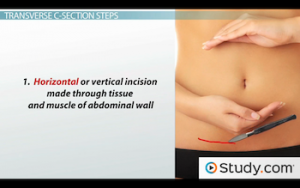 Okay, so now that we know some of the reasons for – and the risks of – a C-section, let’s take a quick look at how a C-section is performed.
There are two main techniques that doctors nowadays use to perform C-sections. The transverse incision is a horizontal cut across the mother’s abdomen, and the classic C-section is a vertical cut down the mother’s abdomen.
Of the two, the transverse incision is usually preferred due to a lower chance of blood loss and quicker healing. In this procedure, the doctor makes a horizontal incision across the mother’s abdominal muscles – below the curve of the belly but above the bladder. If you think about the location of a bikini, the incision would be made right above the bikini line, like this:
Location of a transverse incision. Next, another identical incision is made through the uterine wall.
Classic C-Section Steps
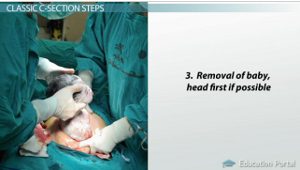 Delivery of a baby through C-section
In the classic C-section, a vertical incision is made down the center of the mother’s belly. Just like in the transverse procedure, the first incision cuts through the tissue and the muscle, and then a second incision is made through the uterine wall.
This procedure is called the classic procedure because it was the first style of C-section surgeons used. However, once the transverse method was created and doctors saw that it produced less blood, fewer complications and provided an easier recovery, the classic method was no longer used except in special c